Developer Tools / Workflow Automation 2026
FlowForge
A self-hostable workflow automation platform where the graph is the program and the run log is the debugger.
- Year
- 2026
- Status
- Built
- Platform
- Web · API
- Scope
- Web application, Execution engine, API
Overview
FlowForge builds automations as a graph of typed nodes, runs them, and records exactly what every step did. It depends on nothing beyond PostgreSQL, and its execution engine is small enough to read in one sitting.
Challenge
Most automation tools are designed for people who don't want to see the mechanism. When a run fails, the question is which node failed, with what input, and why — and many tools make that hard to answer.
Direction
Runs are synchronous and single-pass, so a failure has one obvious place to look. Node types describe their own configuration once, and validation, the editor form and the palette are generated from it. Execution history is append-only: a retry creates a new record rather than rewriting the old one.
What was built
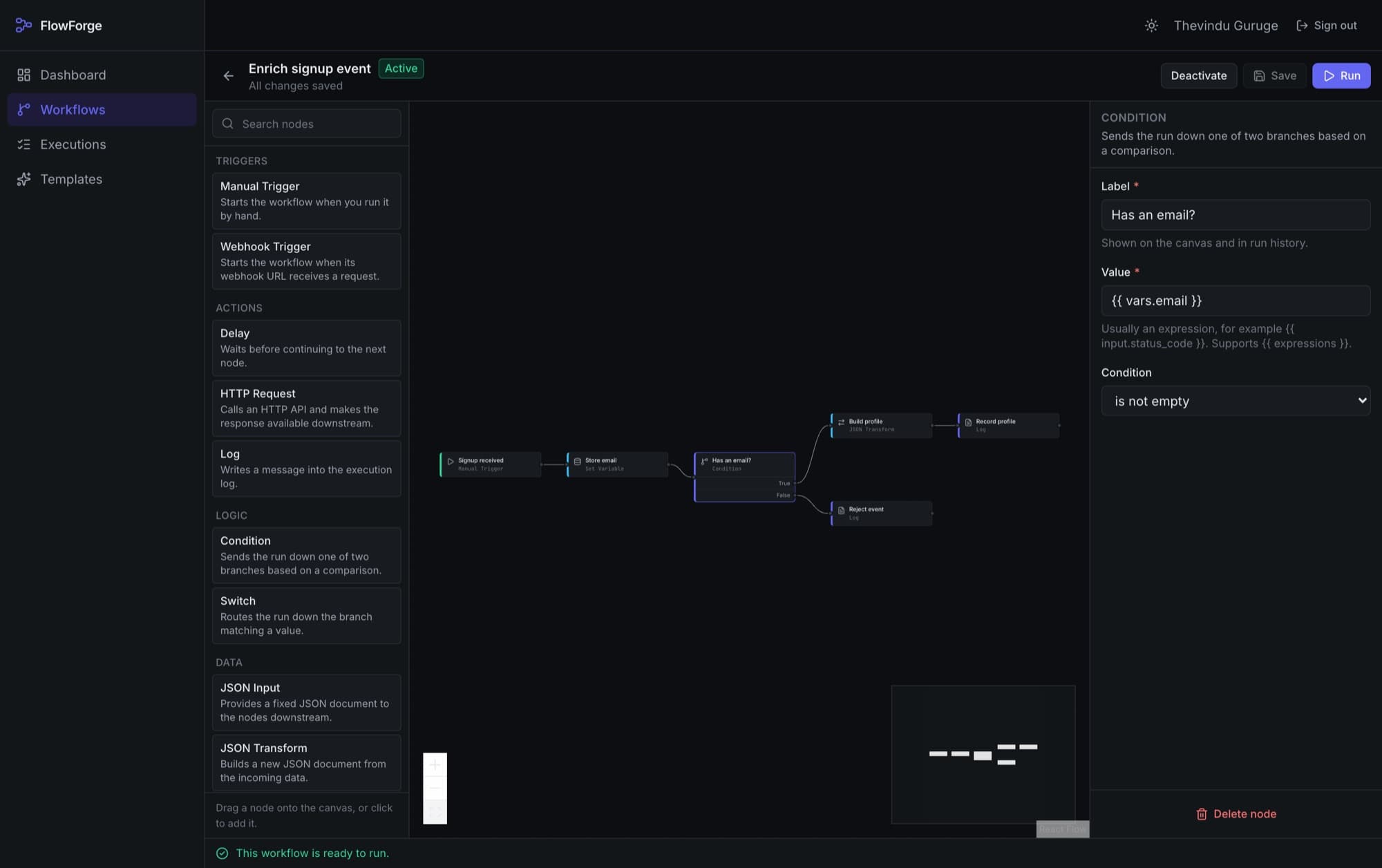
- Visual editor on React Flow: palette, typed handles, minimap and keyboard shortcuts
- Configuration forms generated from each node type's schema
- Validation that names the node and field, and catches loops and missing triggers
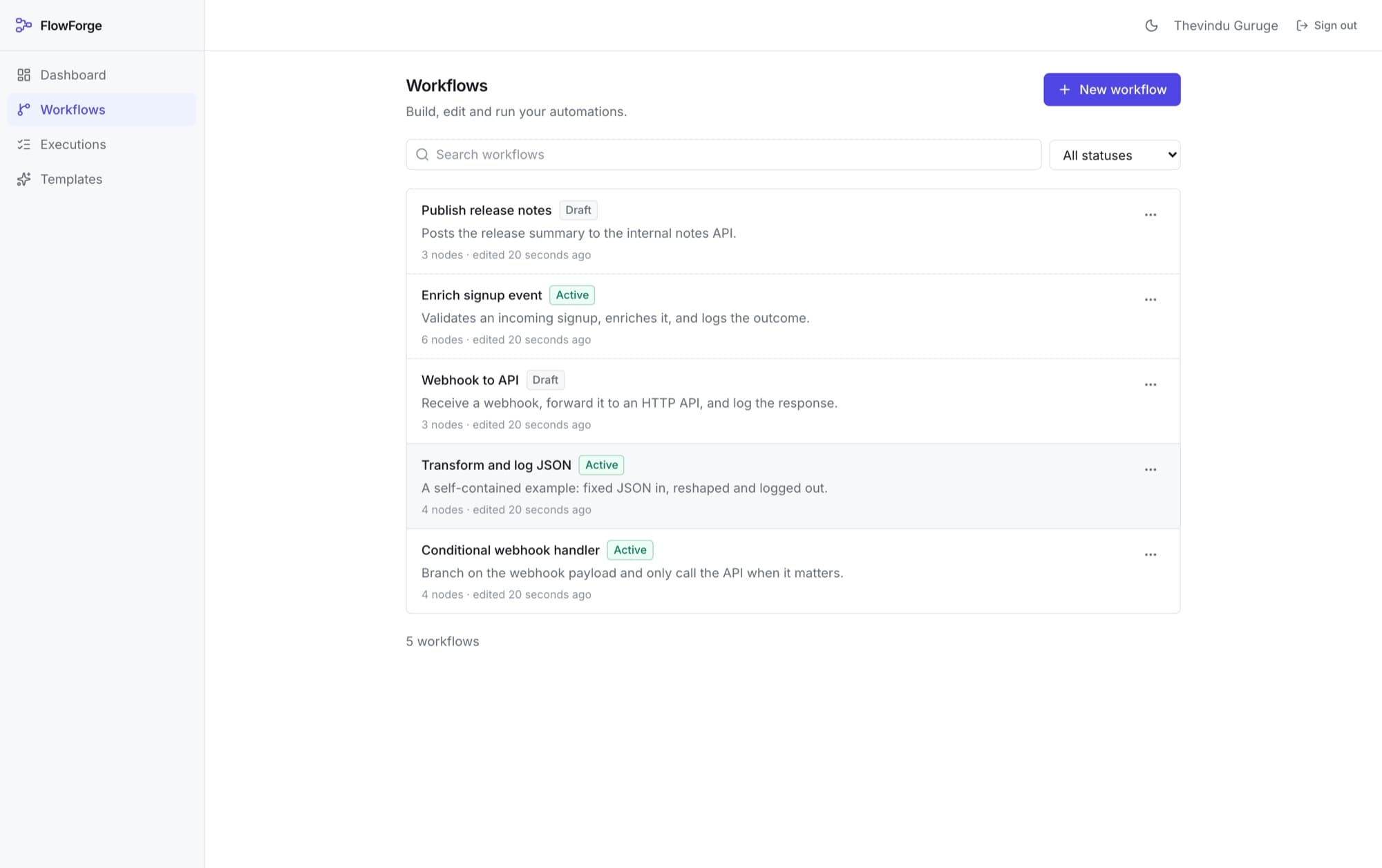
- Ten node types, including webhooks, HTTP requests, conditions and switches
- A safe expression language for referencing run data, with no eval
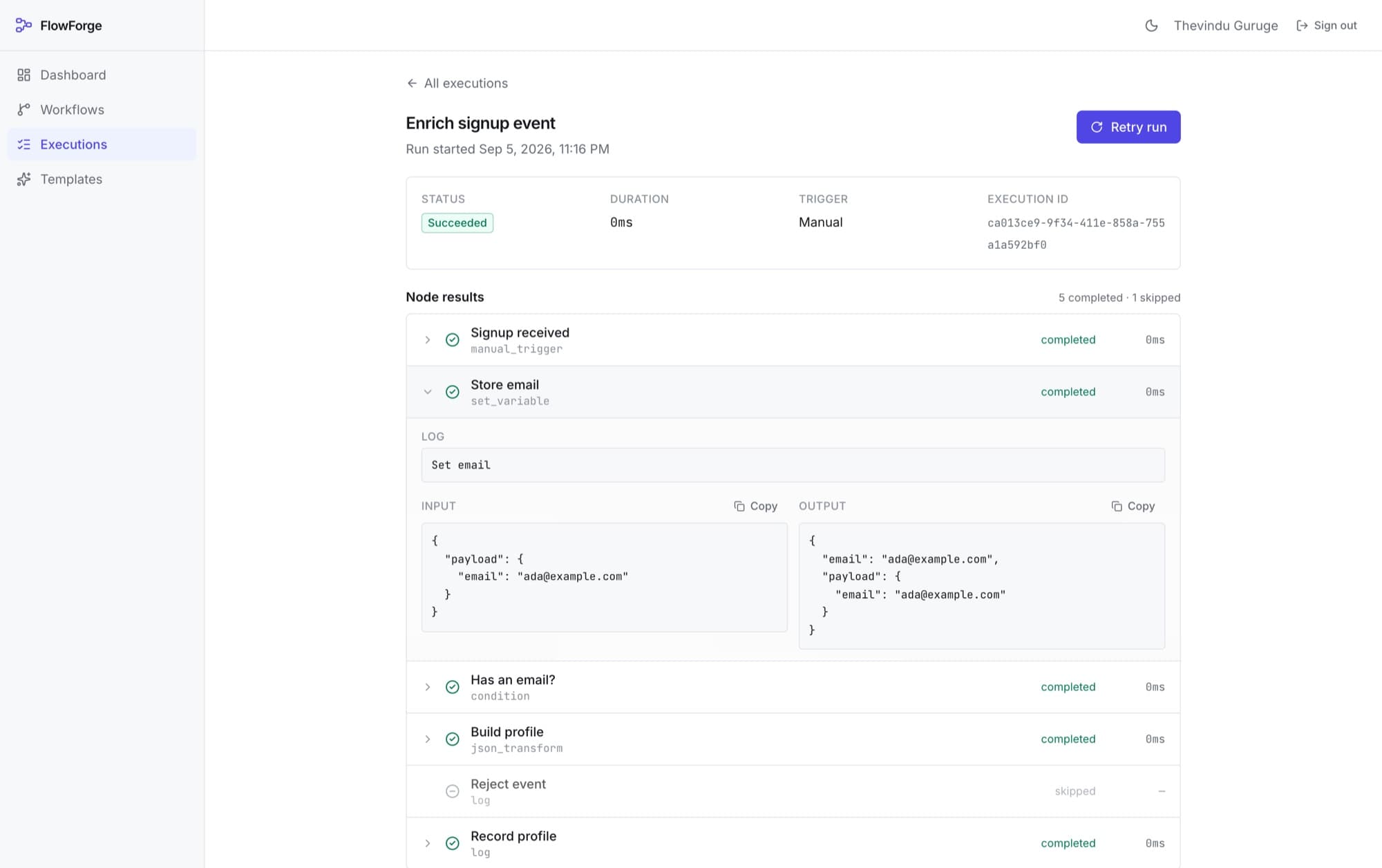
- Execution history with per-node input, output, logs, errors and timing
- Retry with original trigger data, preserving the original record
- Argon2id authentication, SSRF protection on HTTP nodes and rate limits on public endpoints
Technology
- Next.js 16
- React 19
- React Flow
- TanStack Query
- FastAPI
- SQLAlchemy 2
- PostgreSQL
- Playwright
Outcome
A working, self-hostable automation platform with a readable engine, where every run can be inspected node by node after the fact.
Screens